
The Mountains Still Call

I have been reading about mountains my whole life. Into Thin Air. Touching the Void. Accounts of the Alps, the Himalayas, and climbers who gave years, and sometimes everything, to something most people will never understand. I rock climb too — nothing like what those books described, but enough to know what it feels like when the wall asks something real of you and you find out whether you have it.
The big peaks lived in my imagination the way certain things do when you’re young and physical, convinced the next level is always available if you want it badly enough. Maybe someday. Maybe.
Then came the accident. The someday conversation ended.
Earlier this week, I was listening to Seth Deckman’s podcast with Ed Viesturs, arguably America’s greatest mountaineer — one of the very few to climb all 14 of the world’s 8,000-meter peaks without supplemental oxygen. It took him nearly 20 years.
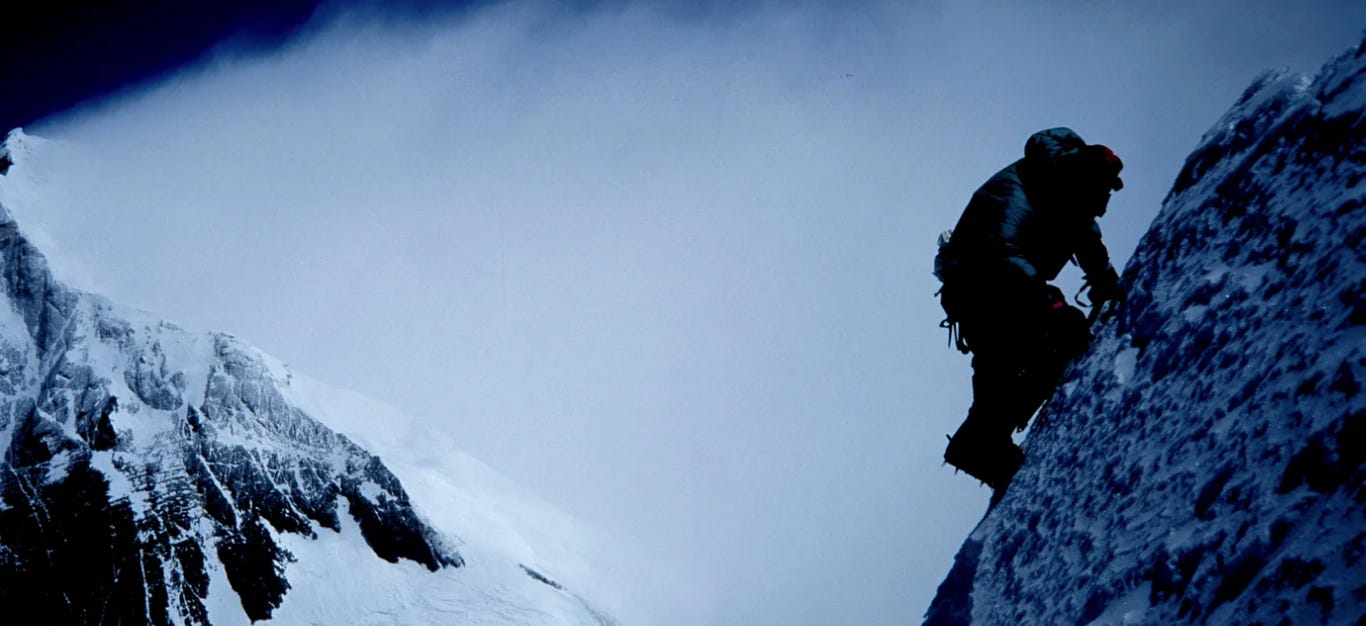
People talk about Everest as the ultimate test, and it is. But there are 13 others, many more dangerous, more technically demanding, and less forgiving. Ed did them all. Methodically. Patiently. On his own terms.
When asked why he refused oxygen, he said he didn’t want to bring the mountain down to his level. He wanted to elevate himself to the mountain’s level.
There is a version of life about making things manageable. Finding the workaround. Reducing the ask until it fits what you’re comfortable giving.
And then there is another version. One that asks what you want to be capable of, and holds you to that. Even when the journey is arduous without guarantees.
Ed’s track record was roughly two out of three. One in three times, the conditions said no, and he turned around. He could accept that. What he couldn’t accept was ignoring what the mountain was telling him just because he wanted the summit badly enough.
Ambition overcoming common sense. That’s what actually kills people up there. Not avalanches. Not storms. The human factor.
Reaching the summit is optional. Getting down is mandatory.
He talked about the mountains the way a cyclist would. On a long climb, he said, it’s like a peloton. Someone rides at the front, breaking the wind, then steps back, and the next person takes a turn. Not everyone ultimately makes the summit, but everyone contributes. Nobody reaches the summit on their own.
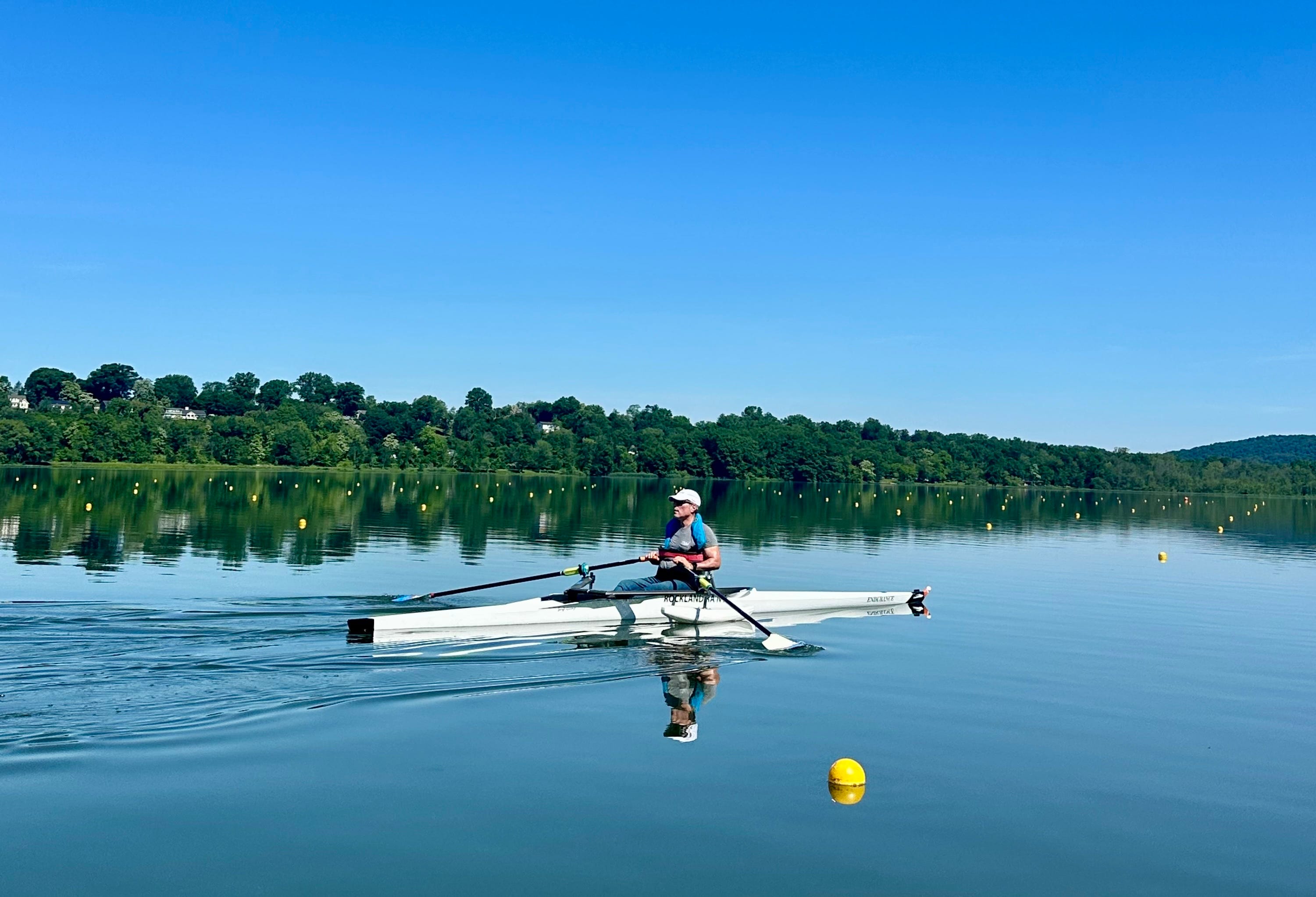
After the podcast, I drove to Rockland Lake and got into a rowing shell for the first time this year.
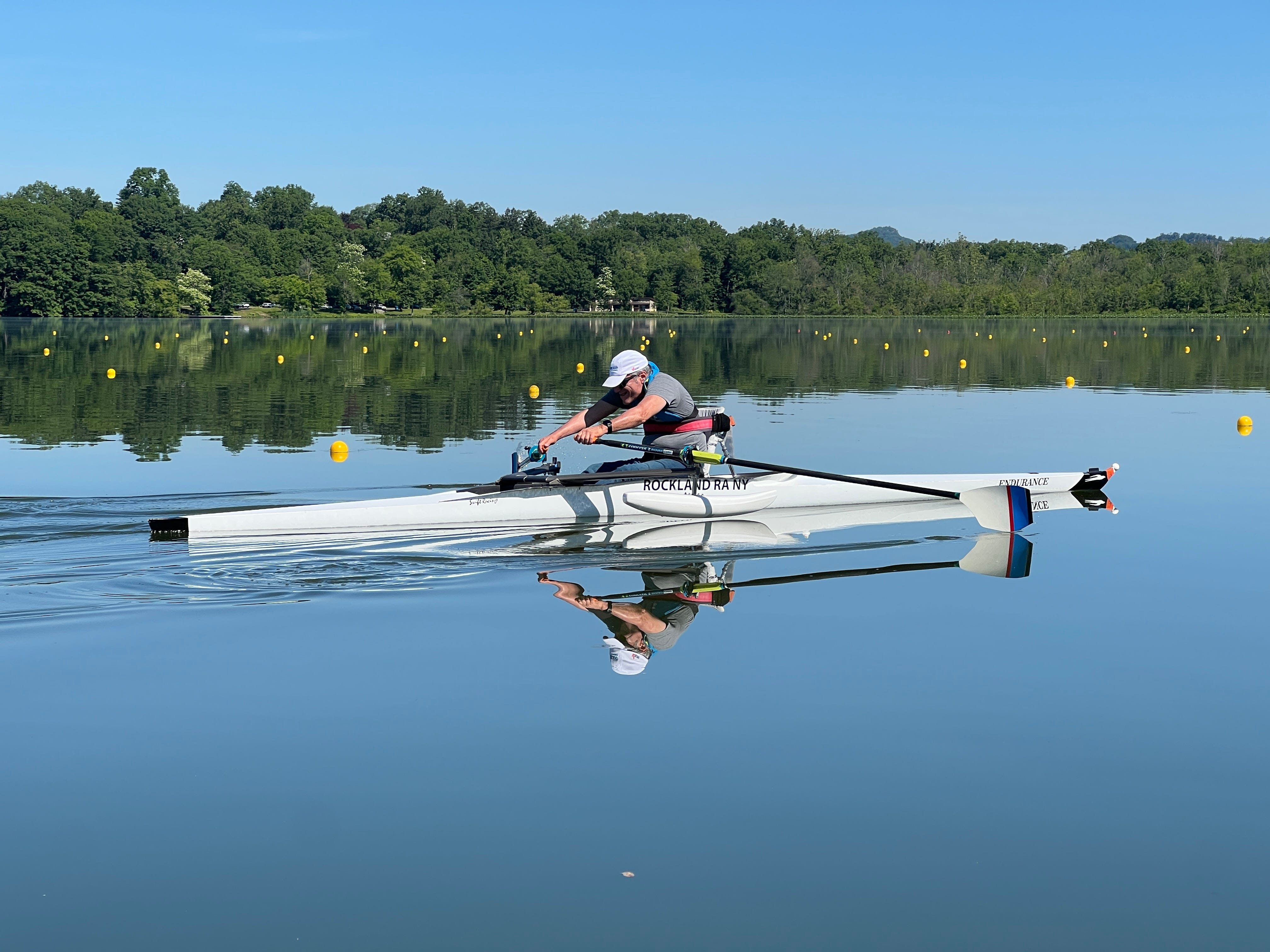
My teammates carried the boat down to the water. They helped me from my chair to the dock. A support boat stayed nearby in case anything went wrong.
I rowed by myself in a single shell but not on my own.
I have the blisters to show for it.
I have learned, not quickly and not without resistance, that needing people to get there is not the opposite of doing something yourself. It is the condition for it. The teammates who carried the boat and the rowing are not two separate stories — just as Ed’s climbing team and the summit are not two separate stories. They are one.
Rowing is not the extent of my adventure dreams, but it is something. And something is a lot more than nothing.
That used to feel like a consolation, but not as much anymore.
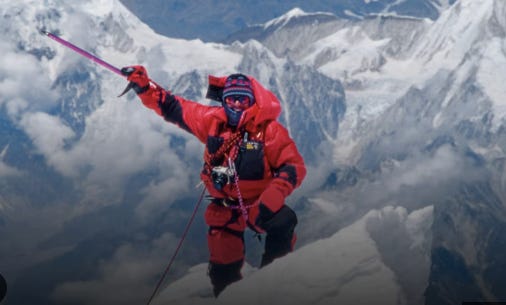
What sticks with me isn’t just Ed’s 14 summits. It’s his orientation. Twenty years. No shortcuts. The patience to keep going and the humility to turn around when conditions demanded it.
He said that when he leaves a mountain, he turns around for one last look and says thank you — summit or no summit — because it gave him something back.
I thought about that on the water this week. On a clear day with flat water, the lake asks something of you and gives something back. The way the body remembers what it loves, even when the form of the loving has completely changed.
The mountains still call. They always will.
I just answer differently now.
... and inspiring, as usual!
Another thought provoking post, well written and powerful.