
The Mooring

A few months ago, I came across a New York Times article about a woman named Emine Yilmaz. In May 2023, she was pushed headfirst into a moving E train on a Manhattan subway platform. She was on her way to an early shift as a barista. A stranger did it. No reason. What reason could there possibly be?
Her neck broke. She’s now paralyzed and was told she would never walk again.
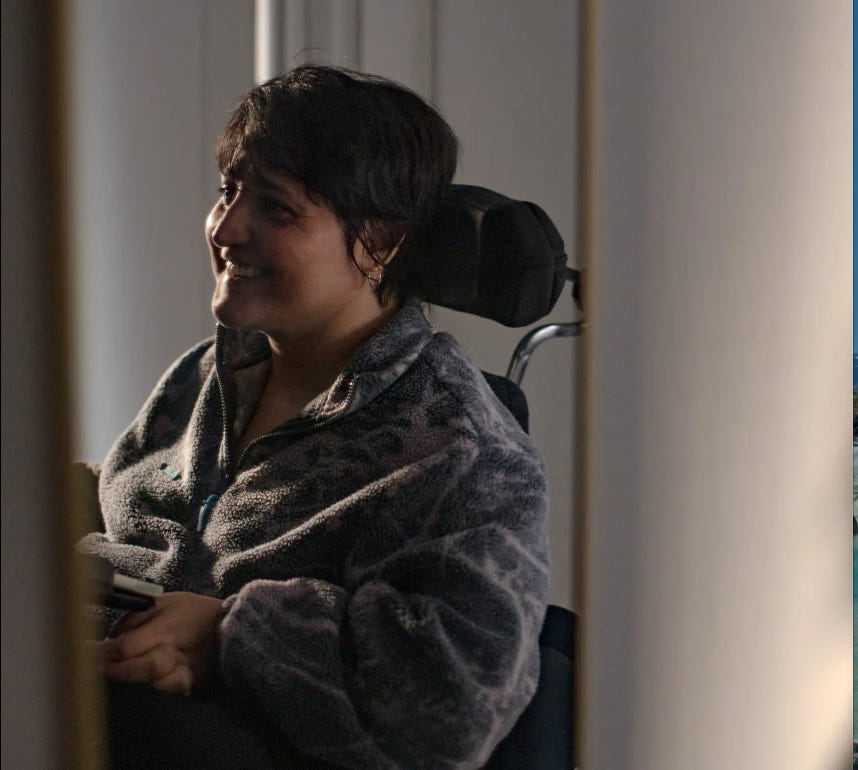
As I read the piece, I realized I was reading my own story, or at least a version of it. The months of sitting. The multiple surgeries that followed the first — for her, procedures to restore some movement in her hands; for me, to save my right leg. The long stillness that settles in when the acute crisis passes and the real work, the internal work, hasn’t yet begun.
For months after the accident, Emine lay in bed or sat in her wheelchair, asking the question most of us ask when something unfathomable happens. Why me?
But it isn’t unfathomable. Nineteen people were pushed onto subway tracks in New York last year alone.
In my case, it was a drowsy driver who crossed the center line. Neither of us did anything wrong, other than being in the wrong place. Why me can be alluring, but over time you discover that the question doesn’t open any doors. The mooring feels safe, but it just keeps you moored in the room you’re already in. Eventually, you either cut the cord or you don’t.
Something changed for her. It wasn’t sudden but happened in increments. The line between giving up and not giving up is rarely just about what’s inside you. It’s often about whether anyone shows up.
Her mother flew from Turkey and moved into her Queens apartment. Her sister came as well. Her husband, from whom she was separated, returned to help. An electric wheelchair replaced the manual one.
They have dents all over the walls from when she was learning to maneuver the chair. You don’t make them by giving up.
We talk about resilience as if it lives inside a person. Some of it does. The will to keep going through six surgeries, to learn to use a wheelchair, to show up for another round of physical therapy — that’s real, and it comes from somewhere deep. But around that inner will, there is almost always a structure made of other people.
I think about Emine and my own recovery, and I see something larger than two people putting themselves back together. We are all wired for human connection, yet it has never been easier to go without it. To stay in a virtual cocoon and mistake the glow of a screen for company. Emine and I experienced that isolation, but we didn’t stay there. Too many others are choosing that path now, without a trauma to explain it. For many people, the mooring is voluntary.
Near the end of the article, there’s a detail about Emine drawing. Before her accident, she was an artist — known for precise, perfectionist work. After six surgeries, she learned to hold a stylus in a cuff strapped to her left hand. She drew a portrait of herself sitting next to her younger sister, with their mother standing behind them, her arms wrapped around them both. It took three days, stopping when the pain became too much, then coming back again.
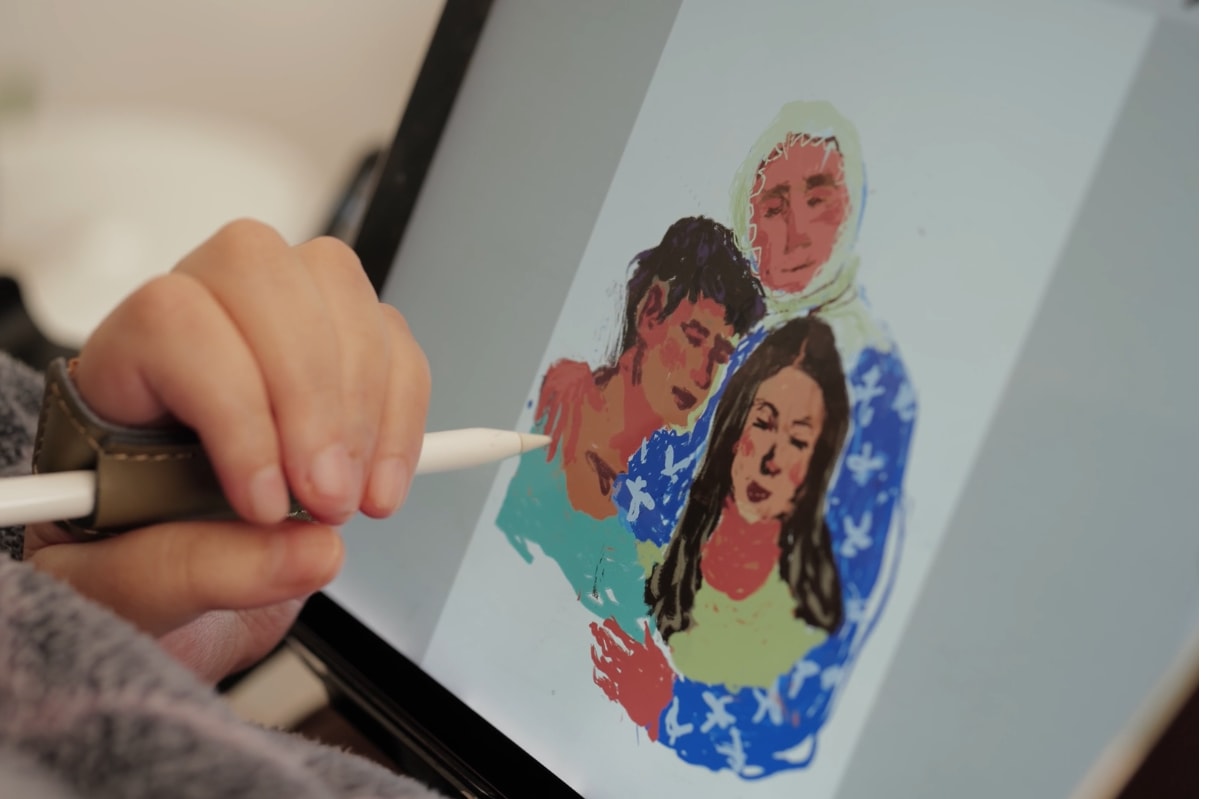
Regarding the new watercolors, which don’t look like her old work, she said: I know it’s not the same style, but I still like it.
There’s a version of your life you had in mind. And then there’s the one you end up living. They rarely align for anyone. The question is whether you can find something worth holding onto in the life you actually have.
She drew a portrait of herself, her sister, and her mother. Three days. A stylus, a strap, and whatever it takes to keep going.
I’d say that counts as an answer.
What an amazing story and how heartening when you realize this applies to us all.
Whatever it takes to keep going; a great motto to live by.