
Silver Lining Not Required

Most nights at Kessler, immediately after discharge from the ICU, I’d lie there with headphones on, listening to whatever dark and somber music I could find.
And I’d pray.
I’m not much of a synagogue-goer. I can’t claim a close relationship with theology—I don’t reject it; I just genuinely don’t know. But for those three months, when the ward grew quiet and the day’s trials receded, I prayed with everything I had.
I just wanted to go back.
Not a better life. Not a lesson. Not some future version of myself who had found meaning in what had happened.
I wanted to rewind the clock.
I’d have taken any version of the life I’d had before.
I thought about all that recently while watching Jesse Malin perform Silver Manhattan at the Bowery Palace.
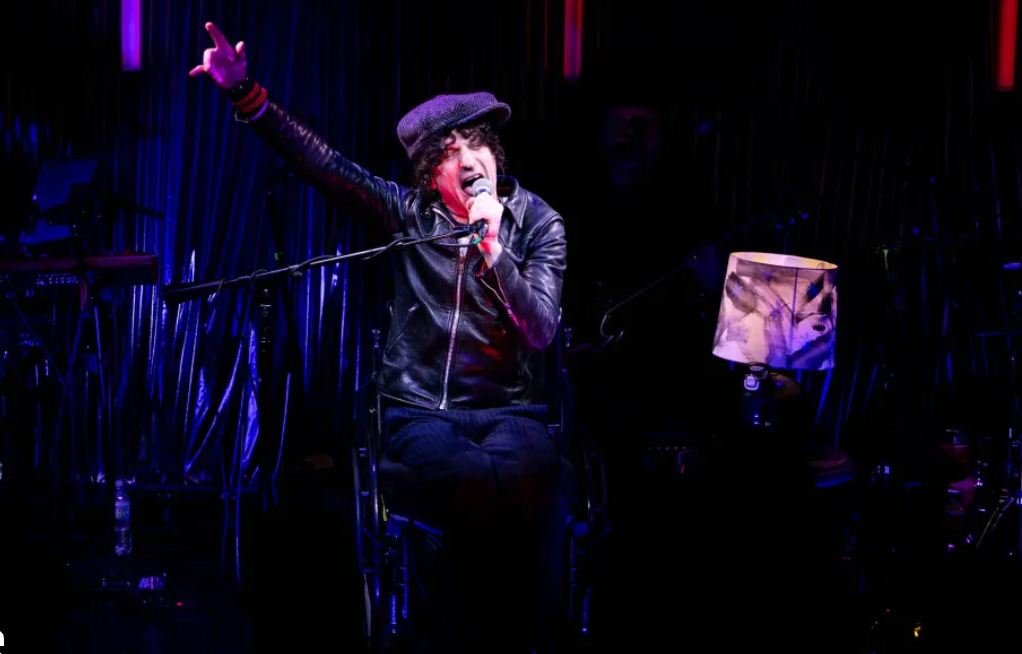
Malin is a Queens kid who came up through the punk scene, played CBGB’s, and built a serious career around music and New York City. In 2023, without warning, he suffered a rare spinal stroke.
One day, he was himself, and the next he wasn’t.
During the show, Jesse mentioned that he started praying, too, even though it’s not something he usually did.
I recognized that immediately. Not as metaphor. As memory.
There’s a particular kind of bargaining that happens after your world collapses. You’re not asking for miracles.
You’re asking for a reversal. A do-over.
You’ll take anything—a partial return, a diminished version, just a thread of continuity with the person you were before.
Jesse described it with the honesty of someone who had been there. I knew exactly where he was.
Our injuries are different. His spinal stroke came on suddenly over the course of a day, medical and inexplicable. Mine was a cycling accident caused by a negligent driver. Violent, external, and survivable only through extraordinary medical intervention.
I was placed in an induced coma and woke weeks later, confused, intubated, and unable to speak, to a world that had already changed without my say-so.
Family members had heard the prognosis. Doctors had made decisions. Life had moved on. Everyone around me had been living with my new reality for weeks.
I was meeting it for the first time.
Silver Manhattan is a rock-and-roll show, but it’s something else, too. Malin tells his story through music and narration woven together, with the songs carrying what the words can’t quite hold on their own. There are elements of a one-man show, but it’s closer to Springsteen on Broadway. The music doesn’t simply accompany the story. It deepens it, making the hard parts easier to approach and the personal parts harder to ignore.
His reinvention and mine are similar, yet different too.
Jesse is still in Manhattan. Still at his club, still with his band, still within the world that shaped him. His body changed, but his geography held.
For me, the old world was simply gone.
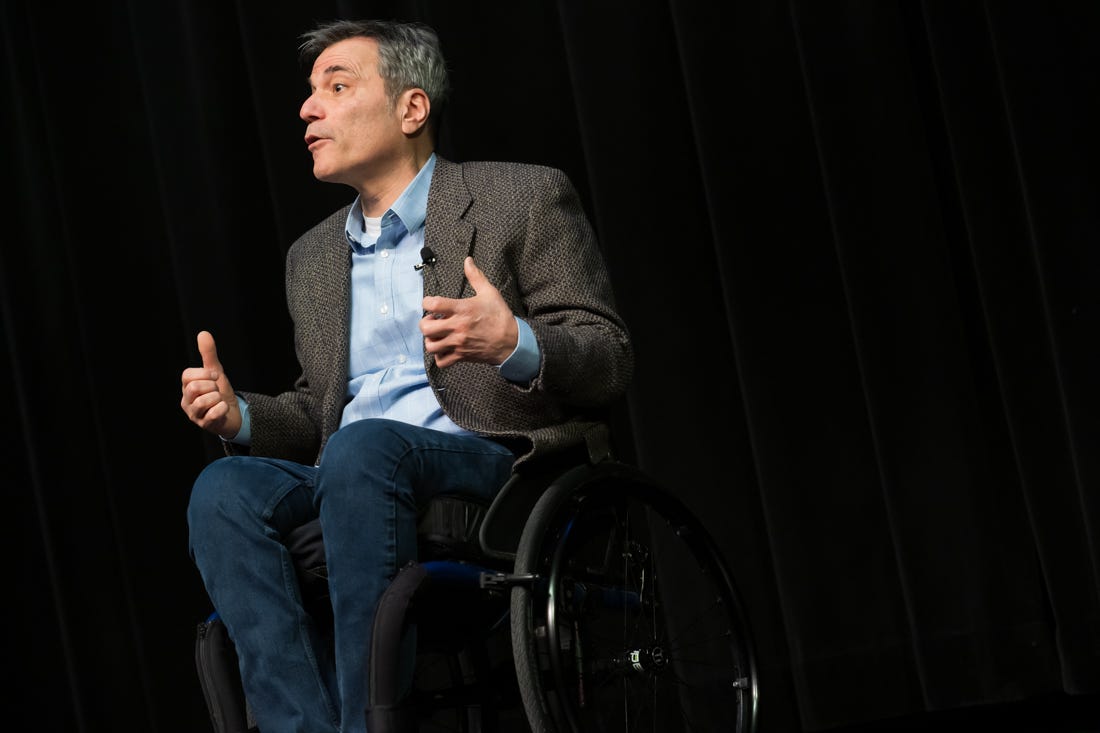
There was no working from home at Barclays. I couldn’t travel as I had. The physical architecture of my former life—the commute, the trading floor, the casual freedom to move through the city on my own terms—was no longer available.
I didn’t have the option to restore something damaged. I had to build something new.
The dark nights are the same.
The bargaining is the same.
The desire to go back is the same.
Neither of us got back the life we asked for.
I don’t know whether Jesse would say he’s made peace with that. I’m not sure I have either.
What I can say is that the act of praying itself meant something—not because it changed anything, but because it restored a small sense of agency in a moment when everything had been stripped away.
That’s what Silver Manhattan is, I think.
Not a triumphant return. A reckoning.
Jesse Malin returned to the stage and told the truth about what happened to him and what it cost. That’s not the same as being okay with it.
Then again, maybe being okay with it was never the point.
Life was already moving forward.
The question was whether I would.
You continue to inspire us all.
You are a brilliant writer. You provide an honest truth to your story in a way that is profound. It’s interesting to me how prayer, even to the non-religious/perhaps non believers, can have a powerful impact.