
Not Nothing
What’s starting to change, and what hasn’t caught up

Yesterday, I took some time to listen to the first session of the Unite to Fight Paralysis symposium from last month. It’s an incredible annual event that brings together Spinal Cord Injury (SCI) scientists, clinicians, biotech representatives, funders, advocates, and those living with SCI.
They all come together not just to present but to push forward. To connect the dots. To maintain a sense of urgency around a problem that’s easy for the rest of the world to overlook.
It’s led by the charismatic Matthew Roderick, centered on constantly challenging the impossible. Or as Christopher Reeve said: “So many of our dreams at first seem impossible, then they seem improbable, and then, when we summon the will, they soon become inevitable.”
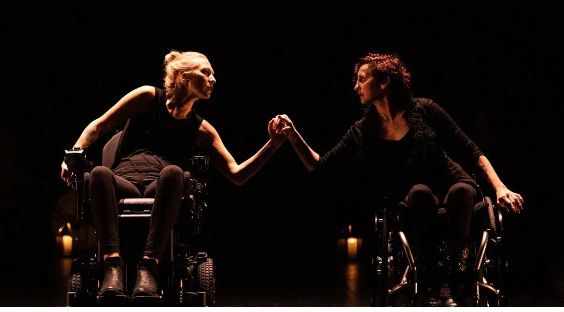
I’m torn because, on one hand, who doesn’t feel inspired by this kind of thinking? And yet, on the other hand, 14 years later, I’m still in this chair. Over those 14 years, not a single development has improved my quality of life.
And still, just as that kind of binary, absolute thinking hampers our political and social discourse today, it doesn’t do justice to the real developments bubbling beneath the surface.
At one point, my physiatrist, Dr. Steven Kirschblum, talked about how, when speaking with newly injured patients, he paints a different prognosis than he did just a few years ago.
It’s not about the immediate situation. That part hasn’t changed. But when considering the longer-term outlook, he’s more cautious about drawing definitive lines. For a long time, the injury was framed quite simply: complete or incomplete. And if you were labeled complete, there wasn’t much hope for recovery. However, that line may not be as clear-cut as we once thought.
Now, with some of the newer methods—stimulation, neuromodulation—you’re starting to see signs that certain pathways can be activated. Not consistently or in a way anyone can guarantee. But enough that he’s not as comfortable speaking in absolutes as he once was.
Then Matthew made a point that seems harsh at first, but actually isn’t.
They’ve asked people in the SCI community a version of this question: if you could wave a wand and change one thing—not eliminate spinal cord injuries, but something realistic—what would it be? A common answer is that people would want someone like Elon Musk or Jeff Bezos to experience an SCI.
Not literally. It’s just another way of saying that if someone with that kind of money, focus, and ability to build teams had a personal stake in solving this, progress would probably be much faster with more funding, more attention, and greater urgency. Not magically, but noticeably.
So, you’re left holding two things at once in how doctors communicate: a feeling that there’s something worth pursuing, and the reality that for people living with this every day, not much has actually changed.
So you’re left holding two things at once:
• Doctors are beginning to communicate differently, and there might be more recovery potential than we previously believed.
• Yet for people living with this every day, not much has actually changed.
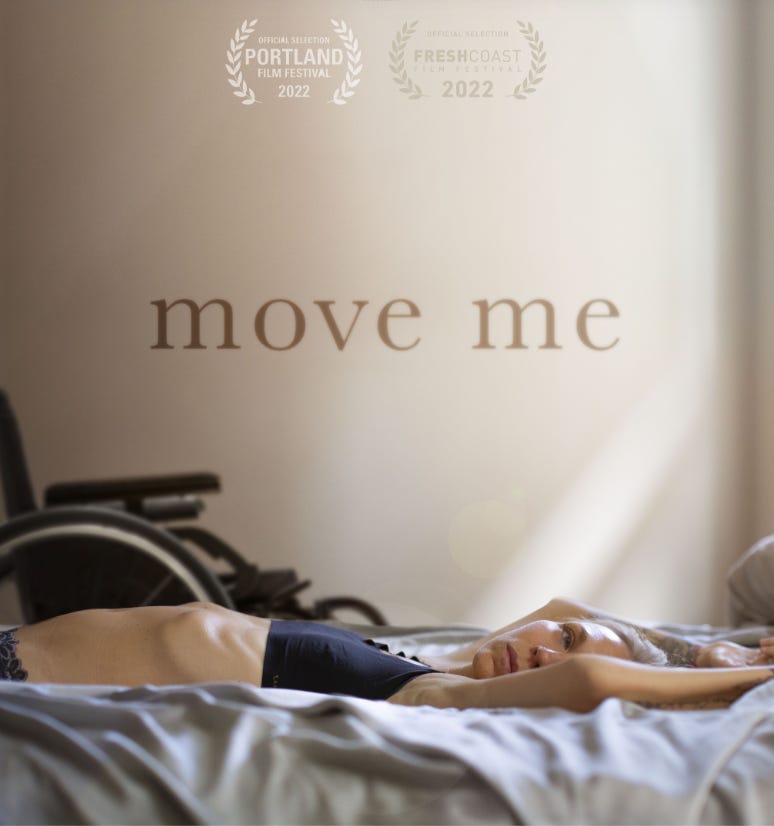
That’s the tension. You hear enough to think something might be shifting, but you’ve lived long enough to know how slow that shift can be.
Even if you're in this world, it's easy to overlook. It doesn’t show up in headlines or interrupt your day, but in how people talk, in what they’re willing to admit they no longer know, and in the fact that conversations aren’t as settled as they once were.
I don’t know where it leads or if any of it will change anything for me.
But It does feel like we’re no longer treating this as something completely fixed.
And after 14 years, that’s not nothing.
It’s not nothing, but it’s not enough!
Insightful thoughts. As always.
On the positive front - I spoke to a developer in Missouri this week, creating a beautiful development of high-end BnB's at Victory Springs, offering the first land access to that famous destination. I asked if some of the units would be accessible. It hadn't been in the plans but he was delighted to do this and realized immediately how important it would be on all levels.
Baby steps.